Carl Friedrich Gauss
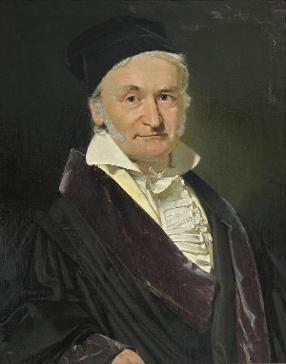
Johann Carl Friedrich Gauss was born on 30 April 1777 in Brunswick (Braunschweig), in the Duchy of Brunswick-Wolfenbüttel (now part of Lower Saxony, Germany), as the son of poor working-class parents. He has contributed to Algebra, Astronomy, Geodetic Survey, Non-Euclidean Geometries and Theorema Egregium.
The British mathematician Henry John Stephen Smith (1826–1883) gave the following appraisal of Gauss: If we except the great name of Newton it is probable that no mathematicians of any age or country have ever surpassed Gauss in the combination of an abundant fertility of invention with an absolute rigorousness in demonstration, which the ancient Greeks themselves might have envied.
Learn More >

 Encouraging the students of ACT to acquire more knowledge in Mathematics and Logic. Learning in a different platform by means of practical demonstration, workshops, creating models, participating quizzes and competitions, poster presentation, attending research lecturers.